.jpg)
Late at night, Katherine, a white-collar worker in the city, glanced at the dazzling array of bottles and jars on her vanity—more than half of them were labeled with the same name: "Centella Asiatica Extract."
This is not an isolated case. From an application perspective, Centella Asiatica Extract has become a "common NPC" (a term used to describe a specific ingredient in skincare products) on the national vanity, with over 220,000 related products on the market.
A review of the "Raw Material Ingredient Trend Insight Ranking" published by China Fragrance & Cosmetics and User Talk over the past six months (January-June) revealed that Centella Asiatica Extract consistently ranks first among plant-based active ingredients and maintains a high popularity across multiple product categories.
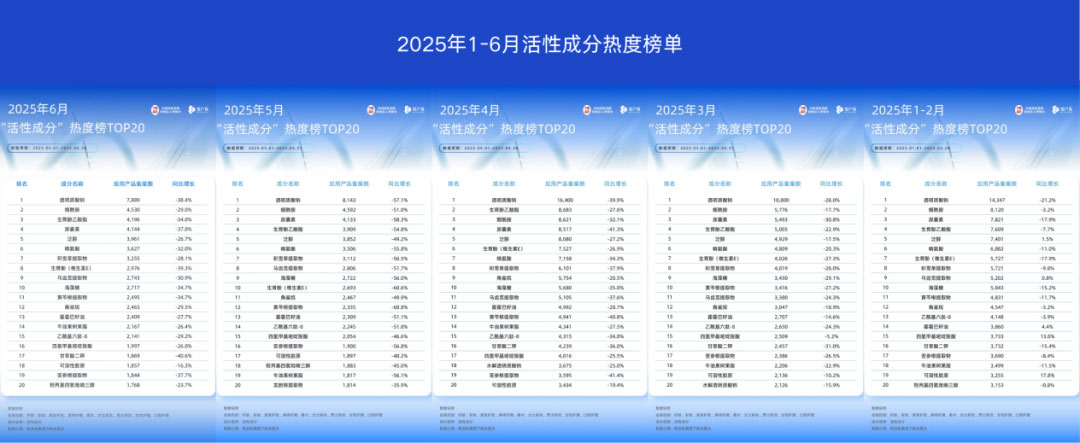 Furthermore, according to Meixiu Big Data's "2024 Annual Efficacy Ingredient Ranking," Centella Asiatica Extract ranks 5th, second only to niacinamide, sodium hyaluronate, panthenol, and tocopherol, becoming the only plant-based ingredient king in the top ten. It's worth noting that Centella asiatica extract has only been officially included in the list of usable ingredients in China for 11 years.
Since its official inclusion in the "Catalogue of Used Cosmetic Ingredients" (hereinafter referred to as the "Catalogue") in 2014, Centella asiatica has become a sensation in the past decade, completing a remarkable transformation from medicinal gardens to laboratories and then to the dressing tables of millions of consumers. Its rise is a textbook example of the modernization of plant-based ingredients.
So, let's analyze the past and present of Centella asiatica to understand how it achieved its "ten-year rise to fame."
Furthermore, according to Meixiu Big Data's "2024 Annual Efficacy Ingredient Ranking," Centella Asiatica Extract ranks 5th, second only to niacinamide, sodium hyaluronate, panthenol, and tocopherol, becoming the only plant-based ingredient king in the top ten. It's worth noting that Centella asiatica extract has only been officially included in the list of usable ingredients in China for 11 years.
Since its official inclusion in the "Catalogue of Used Cosmetic Ingredients" (hereinafter referred to as the "Catalogue") in 2014, Centella asiatica has become a sensation in the past decade, completing a remarkable transformation from medicinal gardens to laboratories and then to the dressing tables of millions of consumers. Its rise is a textbook example of the modernization of plant-based ingredients.
So, let's analyze the past and present of Centella asiatica to understand how it achieved its "ten-year rise to fame."
Traditional Foundation: A Millennium of Medicinal Cultural Accumulation The name Centella asiatica might not ring a bell, but its common names "Thunder Root" and "Tiger Grass" are probably familiar to many.
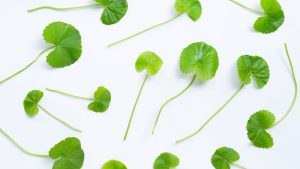
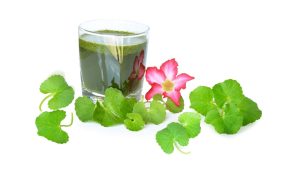
Centella asiatica (L.) Urban, also known as iron lamp grass, money grass, copper coin grass, horse hoof grass, and thunder root, is a perennial herb belonging to the genus Centella in the family Apiaceae. It has the effects of clearing heat and dampness, promoting blood circulation and stopping bleeding, and detoxifying and reducing swelling. It is mainly used to treat fever, cough, asthma, sore throat, enteritis, and dysentery. It has a tender texture, good palatability, and can be eaten raw. The nickname "tiger grass" comes from a folk tale: injured tigers often rolled and rubbed themselves on a small, round-leaved grass, and their wounds healed quickly. Therefore, it was called "tiger grass." This story of animal instinct inspiring humans began the medicinal legend of Centella asiatica. Centella asiatica is a characteristic plant of tropical and subtropical regions, distributed throughout South Africa, India, Sri Lanka, Malaysia, Australia, and other places. It prefers to grow in damp grasslands or along ditches, such as roadsides, ditch edges, and field ridges. As a child, I could see vast fields of it growing on the ridges of rice paddies. In the Guangdong and Guangxi regions, it was often boiled into a herbal tea, believed to have cooling and heat-clearing effects.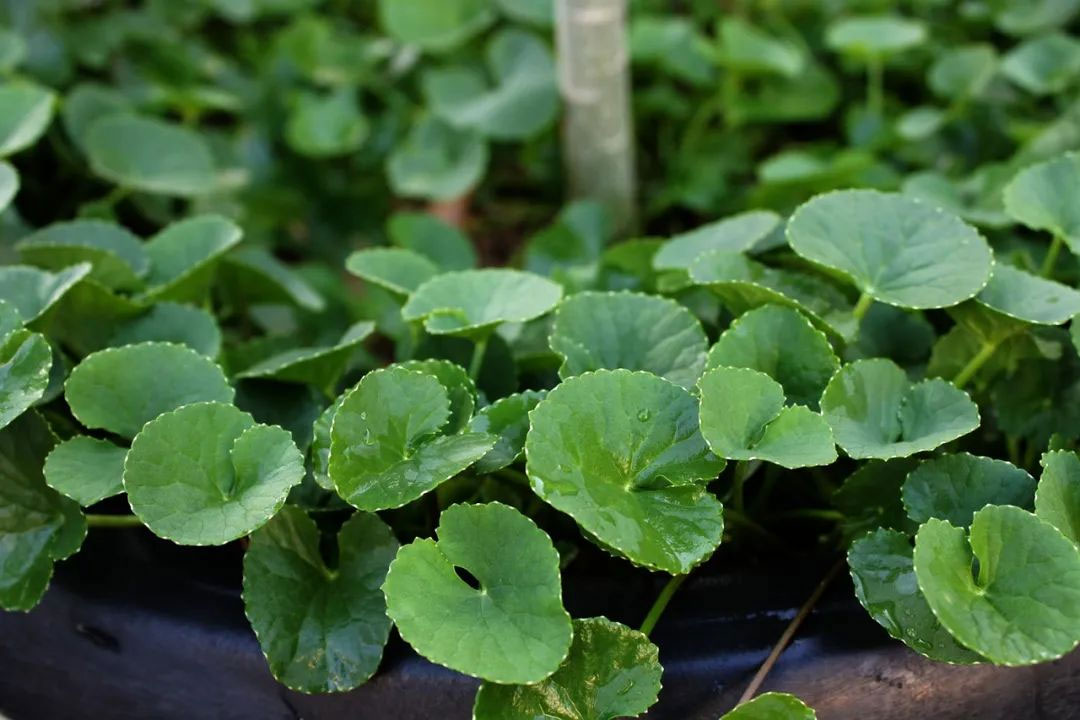
- ✓In East and South Asia, Centella asiatica has a medicinal history of over 3000 years. In traditional Chinese medicine, it is primarily used for clearing heat and dampness, detoxifying, and reducing swelling. Its history of treating wounds and skin diseases dates back thousands of years.
- ✓The Shennong Bencao Jing (Shennong's Classic of Materia Medica) from the Han Dynasty first documented its medicinal properties in writing—"bitter and cold in nature, primarily used for high fever, malignant sores, and carbuncles," used for clearing heat and detoxifying, and promoting wound healing. Physicians would crush the fresh leaves and apply them to soldiers' arrow wounds and to farmers to treat snake venom. Because its leaves resembled a missing corner of a coin, it was popularly called "Broken Big Bowl" or "Broken Coin," and because it survives even under winter snow, it was named "Centella asiatica" (meaning "snow-covered grass"). Despite their varied names, they all point to the same pharmacological effect: the healing power bestowed by nature.
- ✓The Shi Yi Ji records the remarkable effect of Centella asiatica in treating scars. Legend has it that during the Three Kingdoms period in Eastern Wu, Lady Deng, a favorite of Sun Quan, suffered a severe facial injury. Doctors ground Centella asiatica with white jade and amber and applied it externally, ultimately restoring her skin to its smooth state.
- ✓The Song Dynasty texts Su Wen Shi and Zheng Lei Ben Cao describe it as follows: "Centella asiatica is bitter, cold, and non-toxic, suitable for febrile diseases and skin diseases."
- ✓Centella asiatica was already renowned before its active ingredients were fully discovered. Although this stage falls under the category of external medicinal materials, it laid the foundation for subsequent cosmetic development. This thousand-year-old medicinal foundation is one of the key factors in Centella asiatica's popularity in China.
Scientific Research and Transformation: 4 Active Ingredients and Efficacy Verification
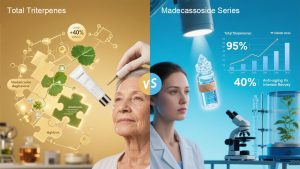
With the development of modern plant extraction technology, the legendary story of Centella asiatica in the cosmetics industry is gradually unfolding. According to records, the earliest extract of Centella asiatica dates back to 1948, when scientists first isolated the core active ingredient of Centella asiatica—triterpenoids, such as asiatic acid, hydroxyasiatic acid, asiaticoside, and hydroxyasiaticoside, clarifying their pharmacological mechanisms of promoting collagen regeneration and anti-inflammation. In addition, Centella asiatica also contains polyphenols and flavonoids. It is precisely because of these components in Centella asiatica that Centella asiatica extract has multiple effects such as soothing the skin, whitening, and anti-oxidation, and can also promote skin damage repair and improve skin barrier hydration.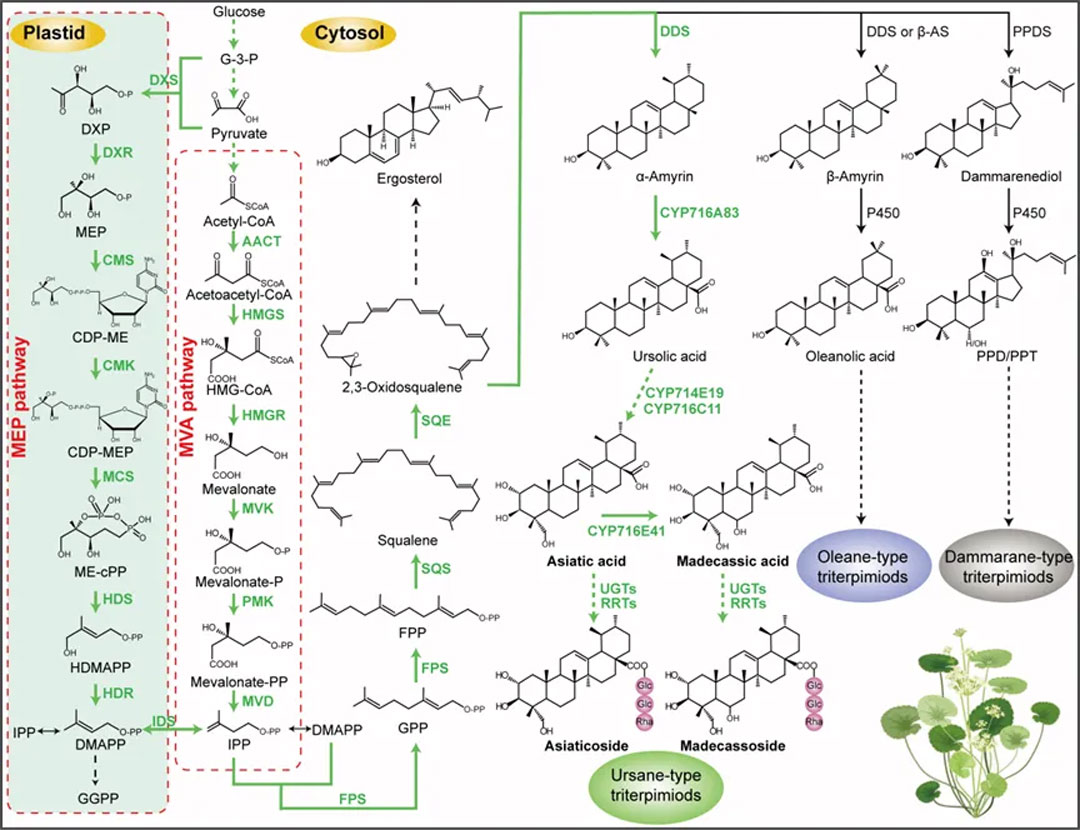 The intervention of modern science has injected precise and explosive power into this ancient wisdom. Modern research has identified four main active ingredients as the effective components of Centella asiatica extract:
- Centella asiatica glycosides: The most important characteristic ingredient, with pharmacological activities including accelerating wound healing, anti-fibrosis, and reducing scar formation. Modern clinical research shows that asiaticoside can effectively inhibit fibroblast proliferation, promote apoptosis of scar fibroblasts, and reduce the number of immune cells, thereby achieving an anti-scarring effect. It also promotes type I collagen synthesis and repairs the skin barrier.
- Hydrated asiaticoside: A potent and highly pure active ingredient, primarily used for anti-inflammatory and skin-soothing effects, repairing damaged skin, and improving skin texture. Studies have shown that it can reduce the production of inflammatory mediators, improve and repair the skin barrier function, promote wound healing, and promote fibroblast growth.
- Anaecolic acid/Hydrated asiatic acid: Strengthens the skin barrier, improves skin elasticity, soothes sensitive skin, and has antioxidant effects. Its main functions are antioxidant and soothing of sensitivity. Research has confirmed that it can stimulate fibroblast proliferation, increase type I collagen production, and accelerate wound healing.
Market Explosion: From Ingredient-Focused to Nationwide Repair The large-scale application of Centella Asiatica extract in modern cosmetics began with innovations from French brands in the 1990s.
In 2005, the French brand La Roche-Posay launched its first B5 repair cream (Cicaplast B5) containing Asiaticoside, specifically designed for dry and sensitive skin, focusing on wound healing, anti-inflammation, and barrier repair. This product, combining Centella Asiatica extract and Vitamin B5, became a representative of the early "cosmeceutical" field. Even today, this repair cream remains highly effective, a star product in the repair skincare world, frequently appearing on top-selling face cream lists, and once hailed as a "savior for sensitive skin."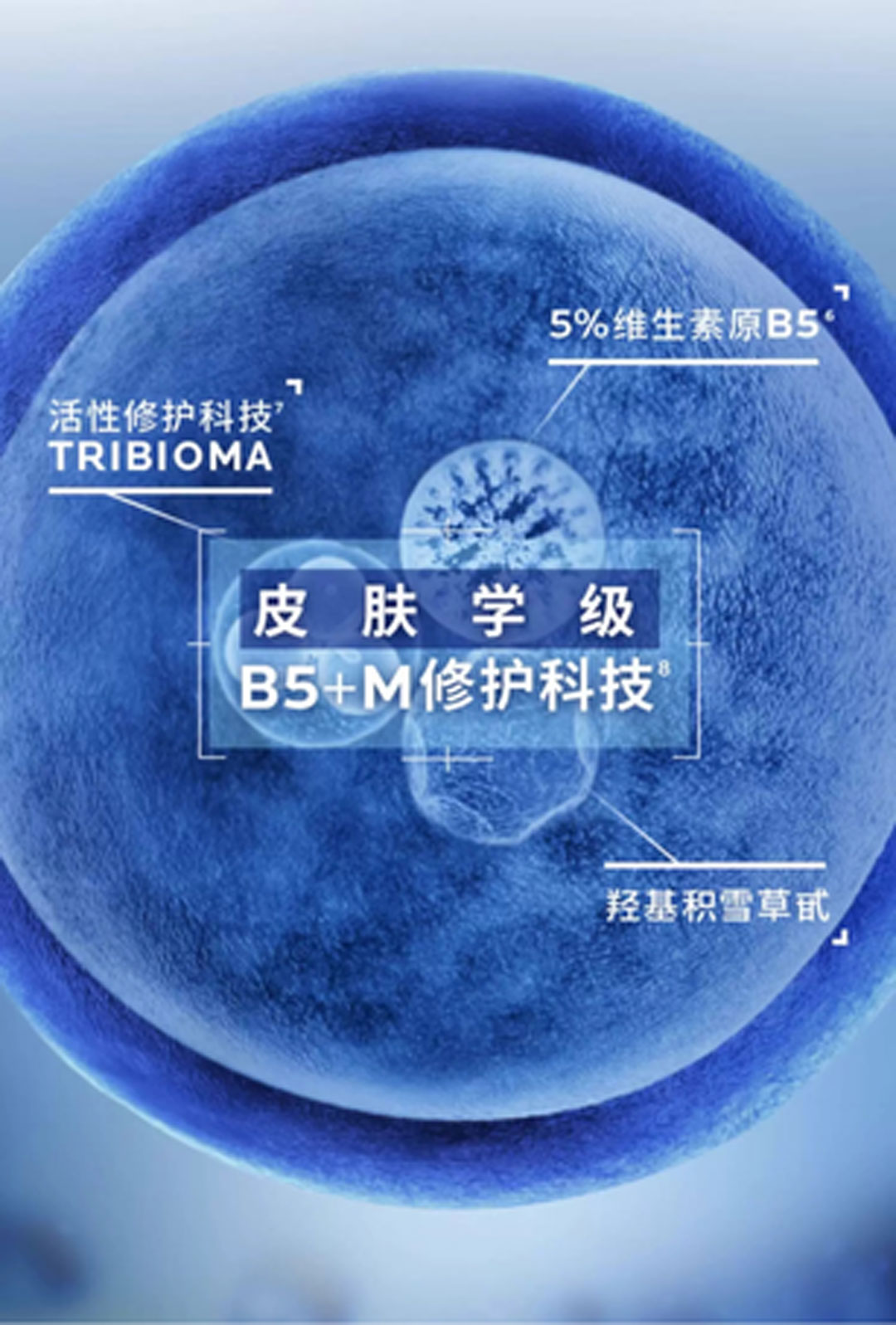 Centella asiatica truly gained popularity in the early 21st century thanks to the "CICA" concept (the Korean abbreviation for Centella asiatica, derived from the French "Cicatrize," meaning "to heal wounds") launched by Korean brands. This emphasized Centella asiatica's repairing properties and its application in acne-prone and sensitive skin care, such as sleeping masks and serums, propelling Centella asiatica extract to the global market.
- ✓Subsequently, major European and American brands such as L'Oréal and Kiehl's adopted Centella asiatica as a core soothing ingredient, launching anti-aging/repair lines containing it to cover the sensitive skin repair market. In 2014, Centella asiatica extract received its "approval license" in China, and brands such as Pechoin, Kefumei, Dr. Aier, Fu'erjia, Turtle Daddy, Kangaroo Mommy, and Yanzhiyouwu all use it.
- ✓In the era of functional skincare, consumers are clamoring for anti-allergy and anti-aging benefits, pushing ingredient standards to new heights. They not only want effectiveness but also multi-dimensional and natural ingredients. As efficacy demands rise, natural ingredients have become a key factor in their skincare choices.
- ✓Centella Asiatica extract, with its three-pronged efficacy matrix of "repair + anti-inflammation + anti-aging," precisely addresses the core anxieties of the sensitive skin era, becoming a top choice for skincare.
- ✓With the expanding population of people with sensitive skin, the trend of universal skin repair is becoming increasingly apparent, driving up the popularity of Centella Asiatica. In 2023, data from Meixiu showed that among registered valid products, over 30,000 brands used Centella Asiatica extract, and over 150,000 products contained it.
- ✓This data is still rising. Data from 168report shows that the global market size for cosmetic-grade Centella Asiatica extract was approximately $190 million in 2024 and is projected to reach $349 million by 2031, with a compound annual growth rate (CAGR) of 9.2% from 2025 to 2031. According to incomplete statistics, in 2024 alone, sales of skincare products containing Centella Asiatica extract reached 3.5 billion RMB on the two major e-commerce platforms, Tmall and JD.com, representing a year-on-year increase of 47%.
- ✓Today, Centella Asiatica extract is a globally popular ingredient, and its development exemplifies the combination of traditional herbal wisdom and modern technology.
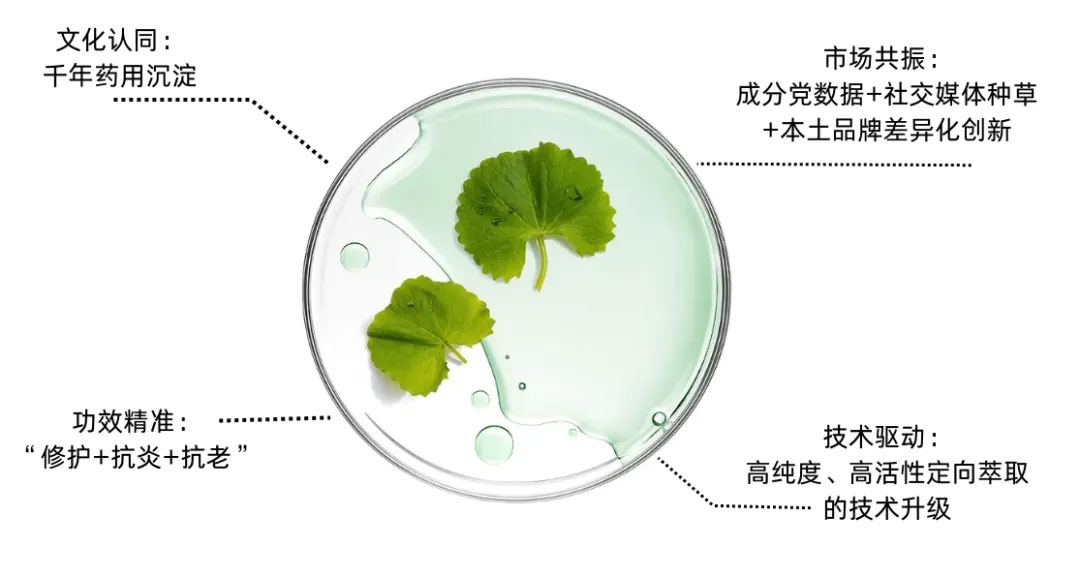
Rise Logic: Four Engines Working Together The explosive growth of Centella Asiatica is not accidental; behind it lies a precisely functioning logic for its popularity:
- Cultural Identity: Traditional medicinal knowledge is a crucial driving force for the application and transformation of plant ingredients. For example, plants like ginseng, Dendrobium officinale, and rose already possess high market recognition, thus gaining rapid acceptance. The same applies to Centella Asiatica; its millennia-old medicinal history provides a guarantee of trust. When it enters the market, this thousand-year-old reputation instantly translates into consumer trust. This monetization process of cultural identity is particularly evident in the East Asian beauty market.
- Precise Efficacy: Repairing + anti-inflammatory + anti-aging perfectly meet the needs of the sensitive skin era. Especially when environmental pollution and excessive skincare intertwine to create common skin problems, Centella Asiatica's three-dimensional efficacy matrix of "repair + anti-inflammation + anti-aging" constitutes the optimal solution for skincare.
- Technology-Driven: Technological upgrades from extensive extraction to high-purity, high-activity targeted extraction have significantly improved the efficacy and application breadth of the ingredient, propelling it into the ranks of mid-to-high-end functional ingredients. Its application essentially represents the transformation of traditional herbs into the consumer market after modern scientific validation, relying on the significant efficacy of triterpenoids in repair and anti-aging.
- Market Resonance: Ingredient-focused data, social media buzz, and differentiated innovation from local brands, along with a massive amount of "personally tested and effective" UGC content on platforms like Xiaohongshu and Douyin, continuously ignite consumer enthusiasm, forming a closed-loop ecosystem of "planting the seed" and "harvesting."
- ✓The decade-long journey of Centella asiatica embodies a classic paradigm of industrial upgrading: cultural assets achieve value reassessment through technological transformation, ultimately monetizing in the consumer market. This path is being rapidly replicated in ingredients such as Dendrobium, Ganoderma lucidum, and Portulaca oleracea—Portulaca oleracea extract is becoming a core ingredient for sensitive skin repair, acne treatment, and daily skin stabilization. The "Winona Soothing and Moisturizing Special Care Cream," containing this ingredient, achieved a record-breaking 620,000 units sold across all channels during the 2023 618 shopping festival.
- ✓The rise of Centella asiatica confirms the success of the "traditional herbs + modern technology" path and provides a model for the commercialization of more Chinese-specific plant ingredients (such as Dendrobium and Ganoderma lucidum).
- ✓However, the real challenge lies in building a competitive moat. With the surge in entrants, the "Centella asiatica" label faces the risk of over-generalization and dilution. The key to future success lies in whether companies can move beyond simple ingredient stacking and advance towards deeper mechanism research, more stable raw material quality control, and more differentiated compound innovation. This is not only a survival rule to avoid infighting, but also an essential path for Chinese ingredients to truly gain global respect.
- ✓Centella asiatica, a plant that has stood the test of time, has gained worldwide recognition. From the farmer's basket to the scientist's test tube, and then to the dressing table of urban women, the journey of this small herb reflects a microcosm of China's industrial upgrading: only by refining cultural heritage into technological strength and accurately connecting laboratory results with market demands can traditional medicinal plants rejuvenate and transcend time.
- ✓After Centella asiatica, the next legend of Eastern plants may already be on its way.