.jpg)
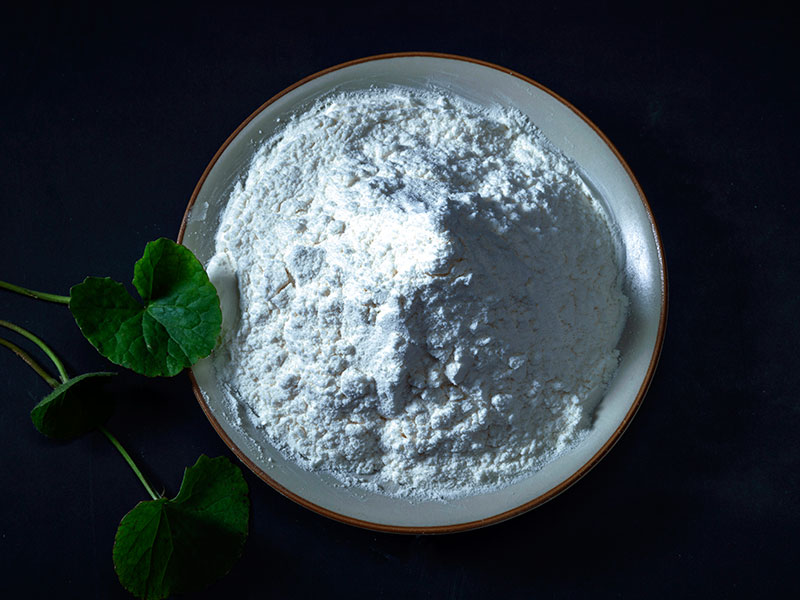
Madecassic Acid
INCI Name: Madecassic Acid
CAS No.: 18449-41-7
Solubility: Insoluble in water, but soluble in alcohols (e.g., ethanol, butanediol, propylene glycol).
Recommended Dosage: 0.1%–1%
Recommended Handling Procedure: Microemulsification technology is required, or it can be pre-dissolved in alcoholic solvents such as ethanol or butanediol before being incorporated into the oil phase or alcohol-based formulation. Add it prior to emulsification or during the cooling phase (below 45°C) to prevent active ingredients from being destroyed by high temperatures.
Synergistic Ingredients: It is often compounded with ingredients including Centella asiatica extract, ceramides, panthenol, hyaluronic acid and β-glucan to enhance the efficacy of antioxidation, anti-inflammation, collagen synthesis promotion and skin barrier repair.
Product Applications: It is mainly used in repairing, anti-sensitivity and anti-aging skincare products such as repair creams, serums, repair gels and sleeping masks.
Efficacy Focus: Compared with asiatic acid, madecassic acid has more prominent anti-inflammatory and collagen synthesis-promoting effects, making it a core ingredient in repairing formulations.
CAS No.: 18449-41-7
Solubility: Insoluble in water, but soluble in alcohols (e.g., ethanol, butanediol, propylene glycol).
Recommended Dosage: 0.1%–1%
Recommended Handling Procedure: Microemulsification technology is required, or it can be pre-dissolved in alcoholic solvents such as ethanol or butanediol before being incorporated into the oil phase or alcohol-based formulation. Add it prior to emulsification or during the cooling phase (below 45°C) to prevent active ingredients from being destroyed by high temperatures.
Synergistic Ingredients: It is often compounded with ingredients including Centella asiatica extract, ceramides, panthenol, hyaluronic acid and β-glucan to enhance the efficacy of antioxidation, anti-inflammation, collagen synthesis promotion and skin barrier repair.
Product Applications: It is mainly used in repairing, anti-sensitivity and anti-aging skincare products such as repair creams, serums, repair gels and sleeping masks.
Efficacy Focus: Compared with asiatic acid, madecassic acid has more prominent anti-inflammatory and collagen synthesis-promoting effects, making it a core ingredient in repairing formulations.