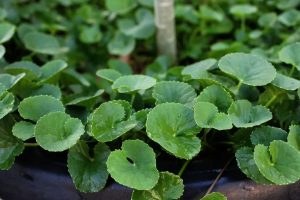
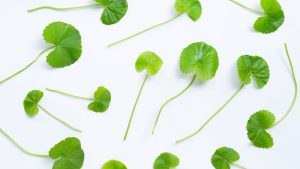
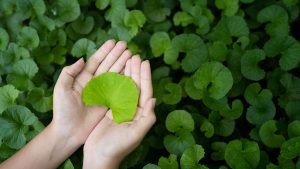
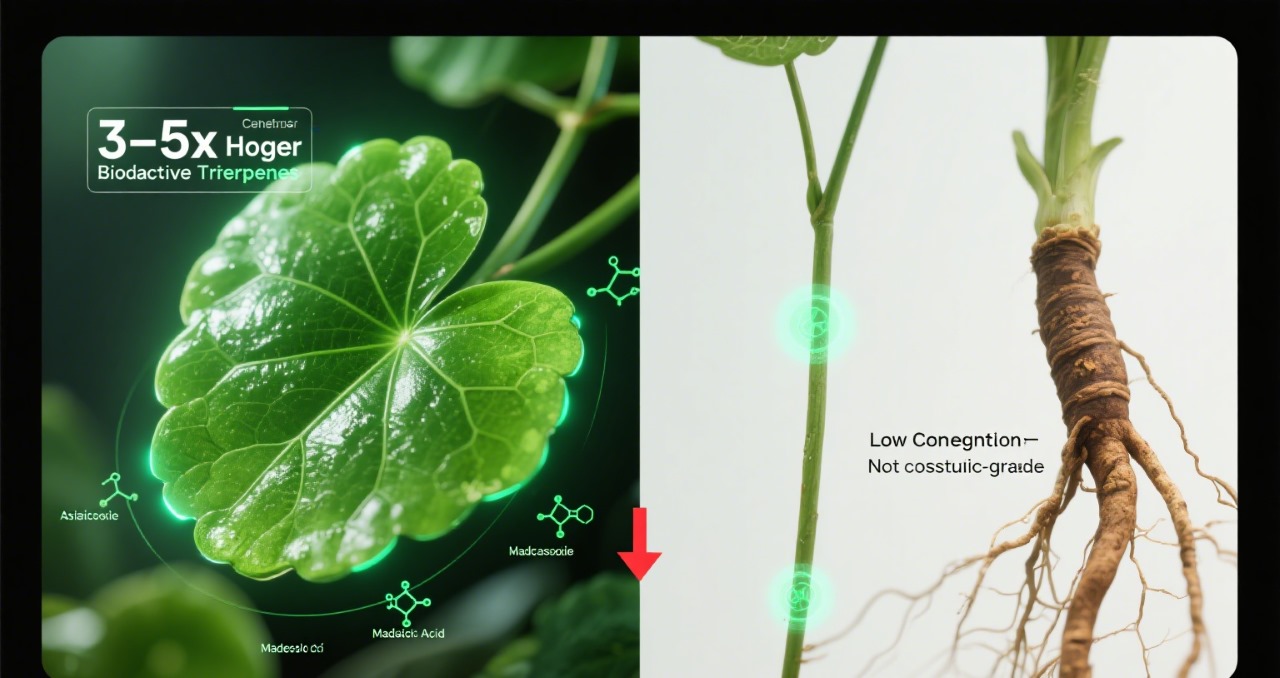
The leaves of Centella asiatica contain 3-5 times higher concentrations of bioactive triterpenes than stems or roots, making them the preferred source for cosmetic-grade extracts.
Premium extracts exclusively use young leaves harvested before flowering, which contain up to 8% active triterpenes (asiaticoside, madecassoside, asiatic acid, madecassic acid) compared to 2-3% in mature plants.
Fresh vs. Dried Centella Asiatica: Which Yields Better Extract for Cosmetics?
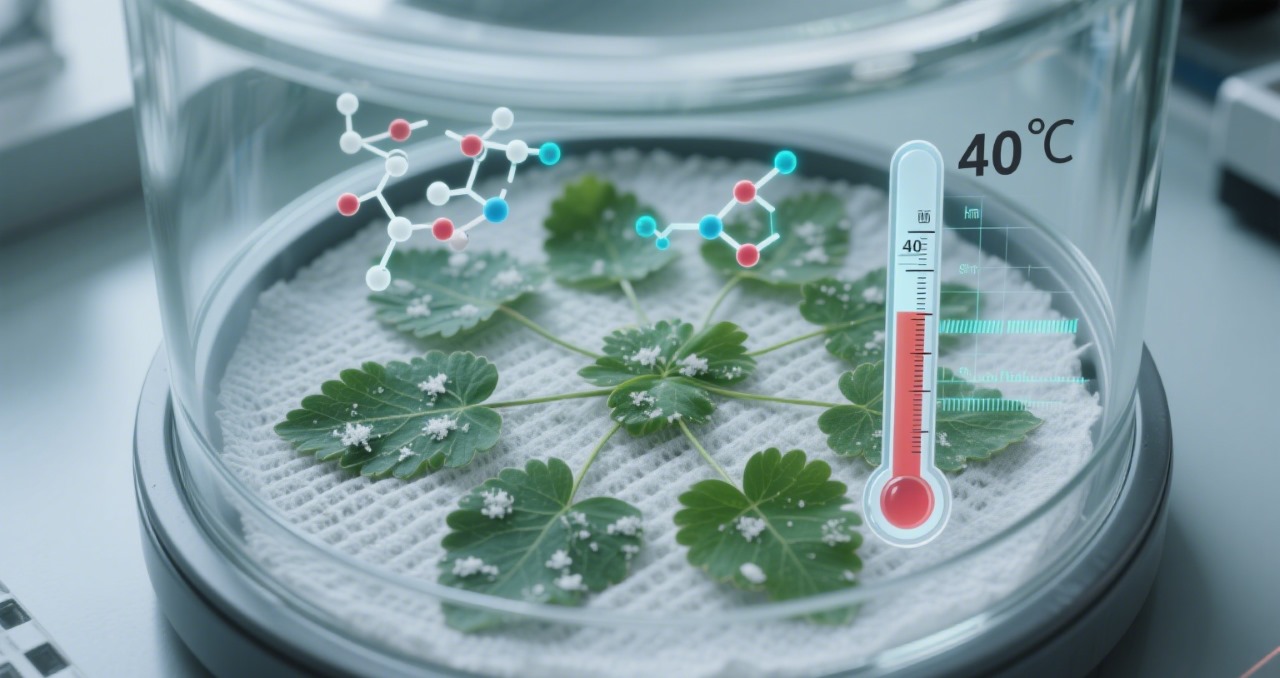
While fresh leaves preserve more volatile compounds, controlled drying at 40°C actually concentrates triterpenes by 15-20% without degrading active ingredients.
Comparative analysis shows:
- Fresh leaves: Higher polyphenol content (8-10%) but unstable compounds
- Dried leaves: 15% increased triterpenes, better shelf stability
- Optimized ratio: 70% dried + 30% fresh for balanced actives
Extraction Efficiency Comparison:
| Parameter | Fresh Leaves | Dried Leaves |
|---|
| Triterpene yield | 4-5% | 5-6% |
| Polyphenol retention | 95% | 80% |
| Processing cost | High (quick processing needed) | 30% lower |
| Active stability | 6 months | 24 months |
| Ideal use cases | High-end serums | Mass-market creams |
How Does the Origin (China, Korea, India) Affect Centella Extract Quality?
Madagascar-grown Centella contains 45% more madecassoside than Asian varieties, while Chinese cultivars show highest asiaticoside concentrations.
Regional differences in active compounds:
- Madagascar: 35-40% madecassoside (best for anti-aging)
- China: 45-50% asiaticoside (optimal for wound healing)
- India/Korea: Balanced 20-25% all four triterpenes
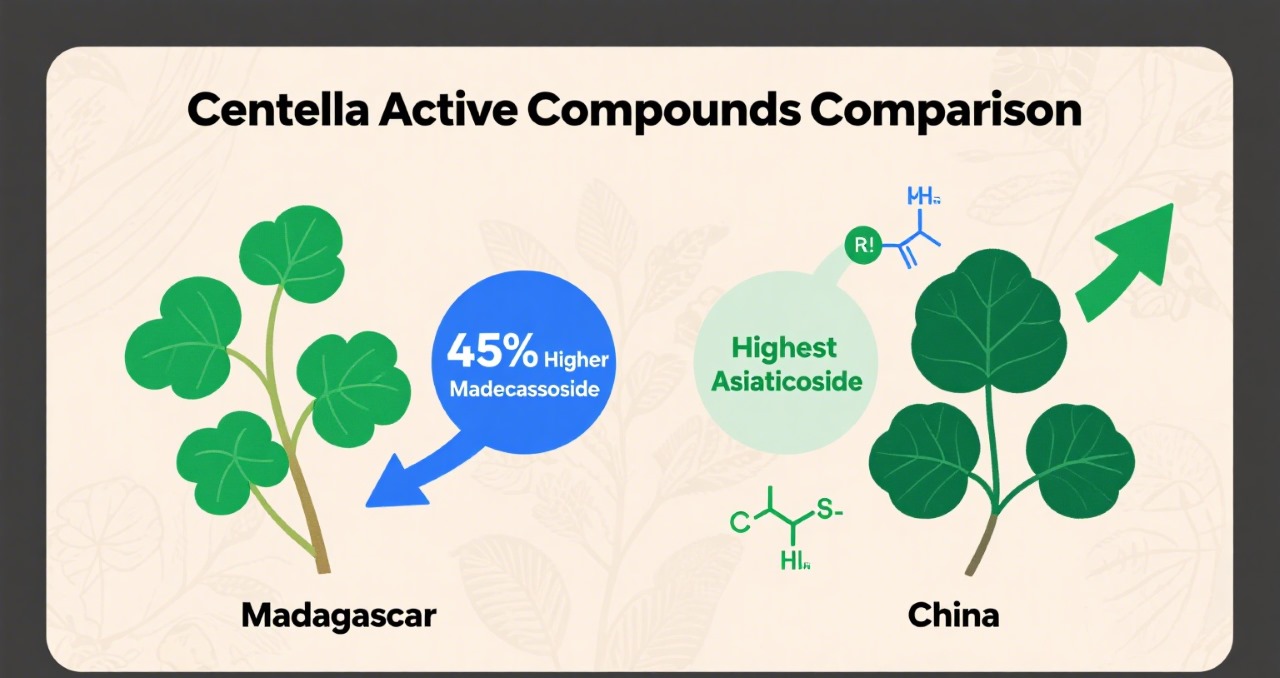
Geographic Profile of Key Actives (HPLC %):
| Origin | Asiaticoside | Madecassoside | Asiatic Acid | Madecassic Acid |
|---|
| Madagascar | 15-18% | 35-40% | 5-8% | 10-12% |
| China | 45-50% | 10-15% | 8-10% | 5-8% |
| Korea | 25-30% | 20-25% | 10-12% | 8-10% |
| India | 20-25% | 22-27% | 12-15% | 10-12% |
Wild-Harvested vs. Cultivated Centella Asiatica: Which Should Importers Choose?
Wild-harvested Centella contains 25-30% higher triterpenes, but controlled cultivation ensures consistent quality and ECOCERT certification.
Key decision factors:
- Wild: 7-8% total triterpenes, seasonal availability
- Cultivated: 5-6% triterpenes, year-round supply
- Sustainable wild: Limited quantities, 20% cost premium
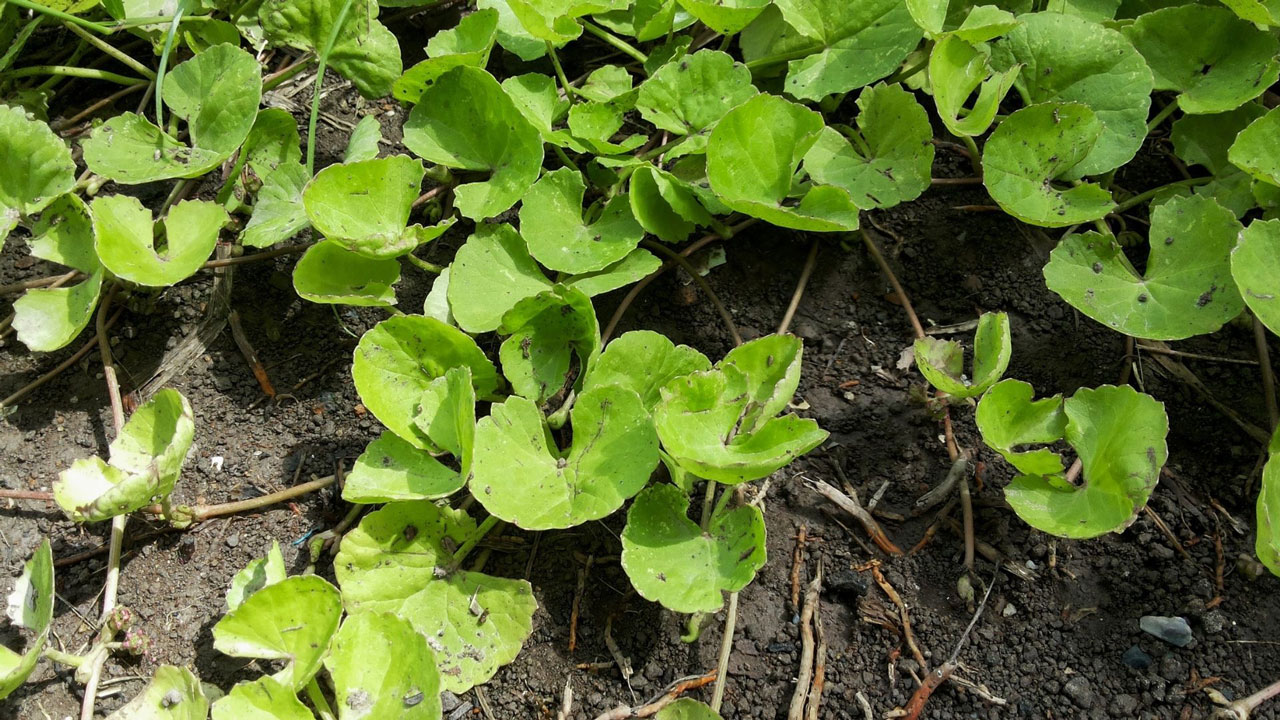
Sourcing Recommendation Matrix:
| Priority | Recommended Source | Rationale |
|---|
| Maximum potency | Sustainable wild (Madagascar) | 30% higher actives |
| Certification needs | Controlled cultivation (China) | Meets ECOCERT standards |
| Cost sensitivity | Contract farming (India) | 40% lower than wild |
| Novel actives | Cell-cultured leaves | Rare compounds like centellin |
Conclusion
For premium skincare formulations, Madagascar wild-harvested leaf extracts offer the highest triterpene content (45%+), while cultivated Chinese varieties provide consistent asiaticoside levels for wound-repair products.



.jpg)